.svg)
Technology
One stack from dock to dashboard
Three subsystems, one contract
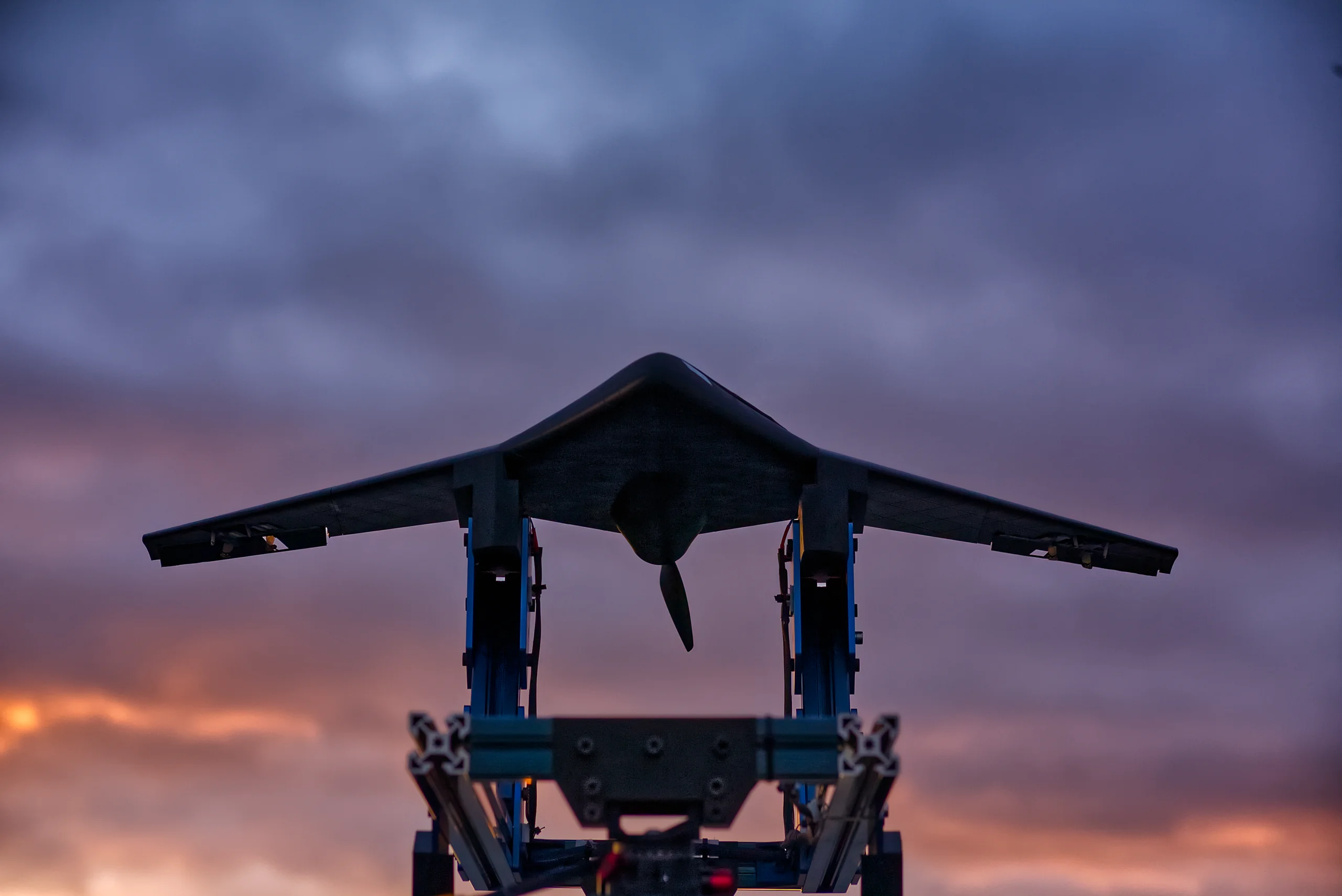
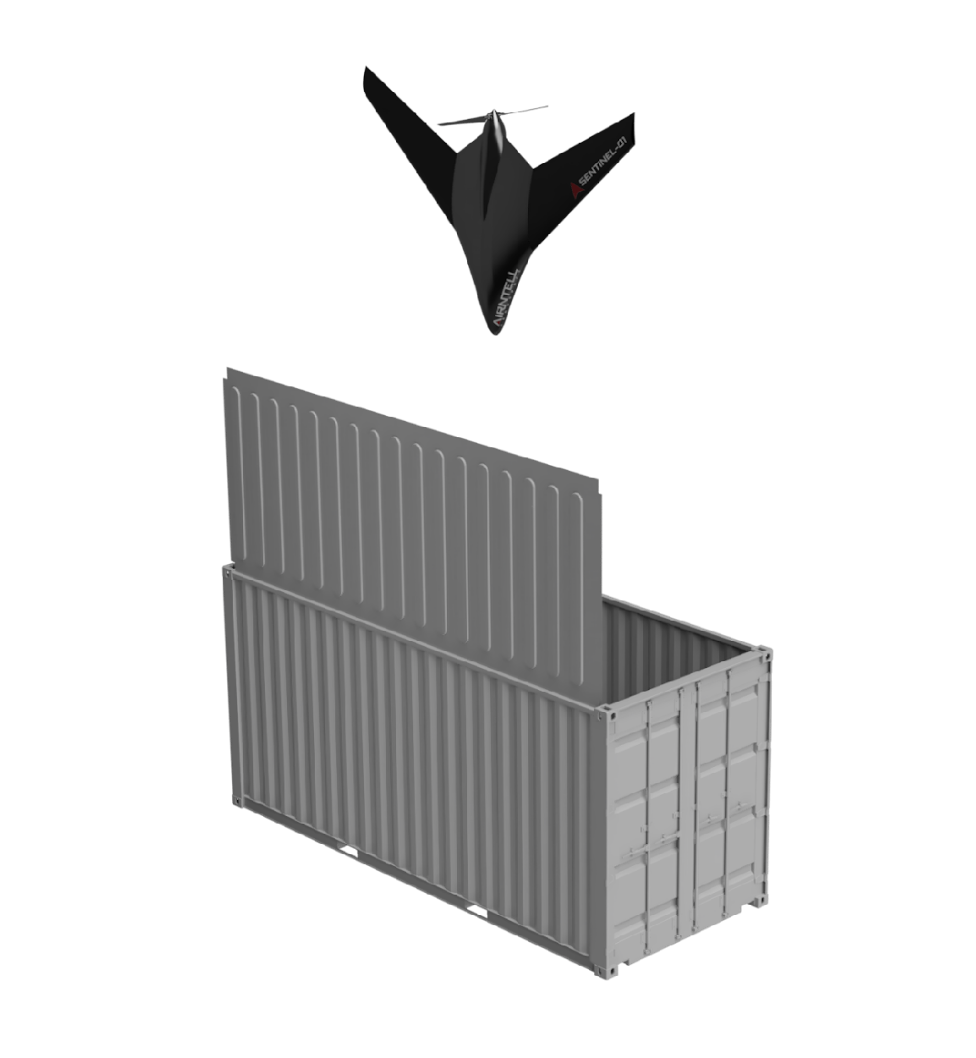
The aircraft is up top in 3D. Below: what the dock and the cloud layer do.
Autonomy hub
Launch, recovery, charging, and mission queue. Everything on site talks here first.
Satellite backhaul
Starlink (or your link) moves video and products out while the mine stays off the public grid.
Ready without a crew on the pad
The dock stays powered and networked so you can task a flight without staging people at the box.
Long-range satellite link
The UAV connects through satellite internet to the cloud layer, keeping the mission online even when the site has no cellular coverage.
Fleet management
The cloud relays fleet state, mission queues, and telemetry to the command centre for centralized oversight across all deployed sites.
Local RF control
Direct radio frequency links between the UAV, base station, and field users for low-latency commands and real-time alerts on the ground.
Redundant paths
Satellite for long-range reach, RF for short-range fallback. If one link drops, the other keeps the aircraft under control.
Video ingestion
The UAV streams video into the cloud where frames are extracted for downstream analysis in near real-time.
AI processing
Cloud-side models detect, classify, and track targets across frames, building a structured picture of what is happening on the ground.
Results handling
Outputs flow to persistent storage and push an updated map back to the UAV so the mission adapts as detections arrive.
Human in the loop
The UAV pushes alerts to field users, who can provide input and decisions back through the interface to refine the active mission.
Built for extremes
110 km/h winds, -30°C conditions, and low-visibility operations on a 1 m-class aircraft.
VTOL plus cruise efficiency
45-minute endurance, 120 km/h top speed, and a platform that bridges remote dispatch with repeatable coverage.

Autonomy-first mission stack
Standard missions are designed for automated launch, route execution, recovery, and downstream evidence generation.
Autonomy and sensing
Multimodal SLAM
Fuse vision, LiDAR, and IMU so the aircraft still knows where it is when GPS is weak or gone.
AI Detection Pipeline
Onboard models find objects, label them, and keep IDs stable frame to frame for reporting.
Technology readiness and roadmap
TRL scale: 1 is concept, 9 is proven in real operations.
UAV Design
Sensor Suite
Data Pipeline
Docking Station
10 milestones completed
- UAV airframe design & fabrication
- Horizontal flight testing
- Flight control system development
- Flight computer development
- Sensing suite design & development
- Simulated environment testing
- Detection / tracking / inferencing tests
- Pilot GUI development
- AWS cloud data hosting
- Docking station conceptual design
9 milestones ahead
- VTOL control system development
- VTOL integrated flight testing
- Navigation autonomy development
- Sensor miniaturization for 1m platform
- Mission testing in operational conditions
- Market-specific customer GUI development
- Market-specific mission customization pipeline
- Docking station design & fabrication
- Docking station testing & deployment